
Botox
Practice with AI
Hone your skills by practicing this case with our AI-powered consultant.
The maker of Botox is considering expanding to the migraine market and has already begun clinical trials in this area. The product is expected to receive FDA approval in 2019. Your team has been hired to assess the viability of this product for launch.
The maker of Botox — best known as a cosmetic injection — is considering expanding the drug's use into the migraine treatment market. Clinical trials have already begun and FDA approval is expected in 2019. The product would be delivered as a prophylactic injection given every two months ($200 per injection). It offers comparable efficacy to market-leading alternatives but with no side effects, and also carries a secondary skin-care benefit. Key competitive context: • The leading branded prescription oral migraine treatment recently lost patent protection, opening it to generic competition. • A strong OTC generic migraine treatment market already exists. • Remaining development and launch costs are approximately $5 billion. • Annual marketing expenses are estimated at $1 billion. • Manufacturing marginal costs are expected to be minimal.
Is the migraine market attractive enough to justify a product launch? If yes, how should the client launch the product — and what strategic risks must be managed carefully?
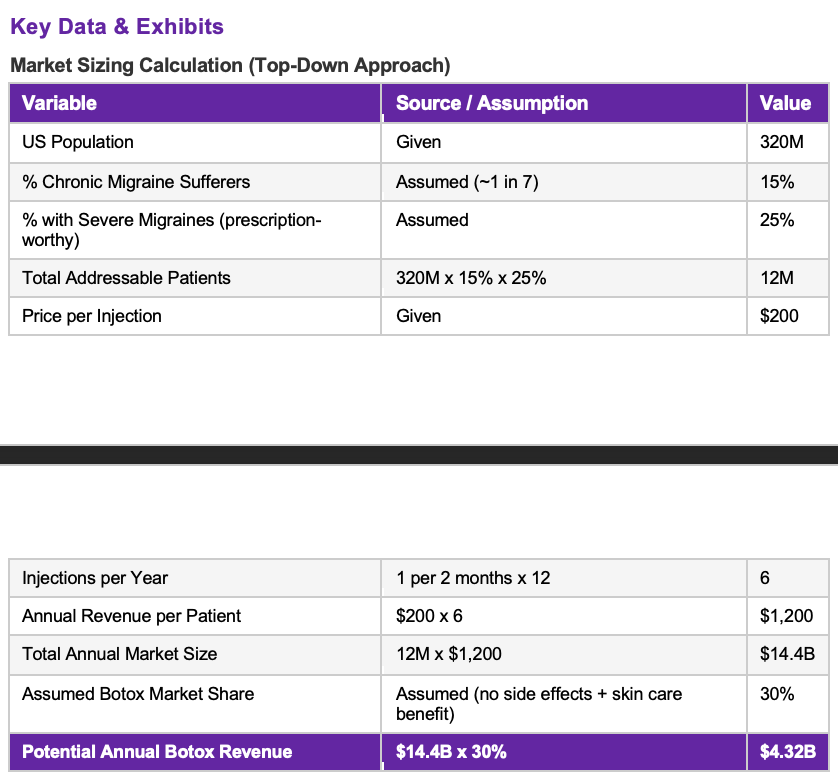
Key Considerations for Launch Branding risks: • The Botox brand has a strong cosmetic identity that may deter migraine patients reluctant to associate their treatment with cosmetic procedures. • Using one brand name for both products creates linked risk — adverse events for one indication could damage both markets. • A separate brand name could allow differentiated pricing and marketing but risks lower market traction. Cannibalization risks: • Launching Botox for migraines at a much lower price point may cause off-label use by cosmetic patients, eroding margins in the more profitable cosmetic segment. • Physicians and consumers may recognize that both products are essentially the same substance, making market separation difficult. Market access risks: • Insurance companies may decline to put the Botox migraine treatment on formulary given comparable efficacy to cheaper generics — patients unable to afford out-of-pocket costs may not convert. • Patient preference for oral treatments over injectables could suppress adoption. Regulatory risks: • FDA may require different labeling and restrict use to specific specialties, necessitating separate marketing teams. • The product has not yet received FDA approval — launch is contingent on regulatory outcome. Recommendation • The migraine market is financially attractive at ~$4.3B in potential annual revenue — the launch should proceed. • Consider launching under a distinct brand name to separate markets and protect the cosmetic franchise's pricing power. • Secure formulary agreements with major insurers before launch to maximize patient access. • Establish regulatory and marketing barriers between cosmetic and migraine indications. Next Steps • Continue clinical trials and pursue FDA approval for the migraine indication. • Initiate formulary negotiations with major health insurers. • Evaluate brand architecture — separate brand vs. sub-brand vs. Botox extension. • Assess international markets to further expand potential market size.
Practice Sessions
Note: Accepted practice sessions will be available in your profile under "My Practice Sessions".
Case Materials
Submissions (0)
Be the first to comment on this case.

Practice with AI
Sharpen your skills by practicing this case with our AI-powered consultant.
Practice Sessions
Note: Accepted practice sessions will be available in your profile under "My Practice Sessions".