
Electro Light
Practice with AI
Hone your skills by practicing this case with our AI-powered consultant.
SuperSoda, a top-three US beverage producer, is considering launching Electro-Light - a low-sugar, electrolyte-focused sports drink targeting consumers moving away from high-sugar products. This case examines the key launch considerations, break-even market share requirements, and growth strategies needed to make Electro-Light commercially viable. It also covers competitive positioning and internal capability requirements.
- SuperSoda is a vertically integrated US beverage company: it controls brand design, marketing, production, bottling, packaging, and distribution to retail. - The company has a broad portfolio of carbonated and non-carbonated drinks, five large bottling plants, and distribution agreements with major retailers. - Electro-Light is a new flavoured sports drink with lower sugar and higher electrolyte content than existing products, designed to capitalise on the health-conscious trend. - The US sports drink market totals approximately 8,000 million gallons annually; electrolyte drinks represent a 5% share (400 million gallons). - SuperSoda's VP of Marketing engaged McKinsey to analyse key launch factors and internal capability requirements.
Should SuperSoda launch Electro-Light, and if so, what market share must it capture to break even — and what strategies will allow it to achieve and sustain that position in the competitive electrolyte drinks segment?
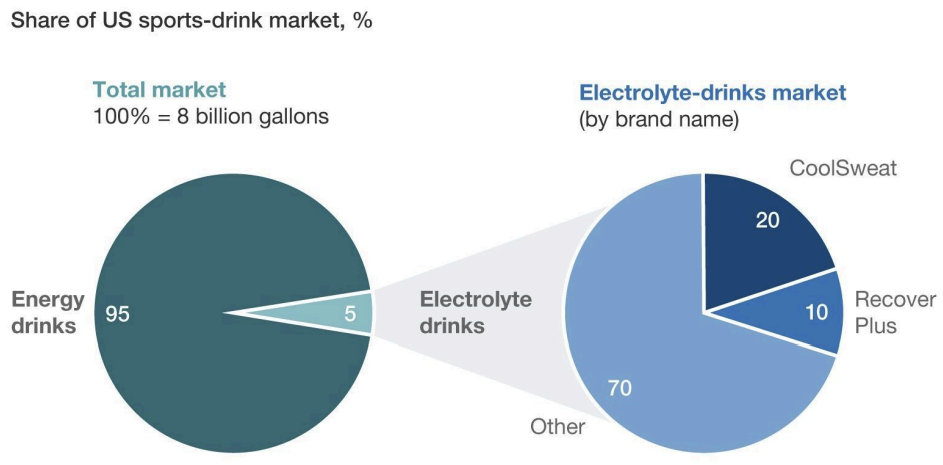
- Build a market entry decision framework around four factors: consumer demand, competitive dynamics, internal capabilities, and financial viability - The 12.5% break-even market share is the core financial anchor — stress-test with scenarios (higher costs, lower adoption rate) - Position Electro-Light as a distinct 'performance hydration' proposition to minimise cannibalisation of SuperSoda's existing beverages - Sequence go-to-market: secure distribution agreements before launch, then execute a high-visibility introductory campaign - Prioritise geographically concentrated plant-level launch first — use the two closest bottling plants to minimise initial fixed cost exposure - Monitor CoolSweat and RecoverPlus response closely post-launch; have a defensive pricing strategy on standby - Track market share monthly against the 12.5% threshold with a defined decision gate at Month 12
Practice Sessions
Note: Accepted practice sessions will be available in your profile under "My Practice Sessions".
Case Materials
Submissions (0)
Be the first to comment on this case.

Practice with AI
Sharpen your skills by practicing this case with our AI-powered consultant.
Practice Sessions
Note: Accepted practice sessions will be available in your profile under "My Practice Sessions".