
Drinks Gone Flat
Practice with AI
Hone your skills by practicing this case with our AI-powered consultant.
The beverage department of a regional supermarket has seen a drop in revenue over the last year and has hired your firm to determine the cause of the decline and recommend ways to reverse the trend.
A leading regional supermarket chain in the southeastern US has experienced a decline in beverage department revenue over the past year. The competitive landscape has not changed. The client wants to identify the root cause of the decline and develop actionable recommendations to reverse the trend. The beverage department sells three broad categories: Sodas, Waters, and Other beverages. Within the soda category, three brands are stocked: Brand A (premium), Brand B (mid-tier), and a Value Brand (store/generic label).
What is causing the decline in beverage revenue and what specific actions should the client take to reverse it?
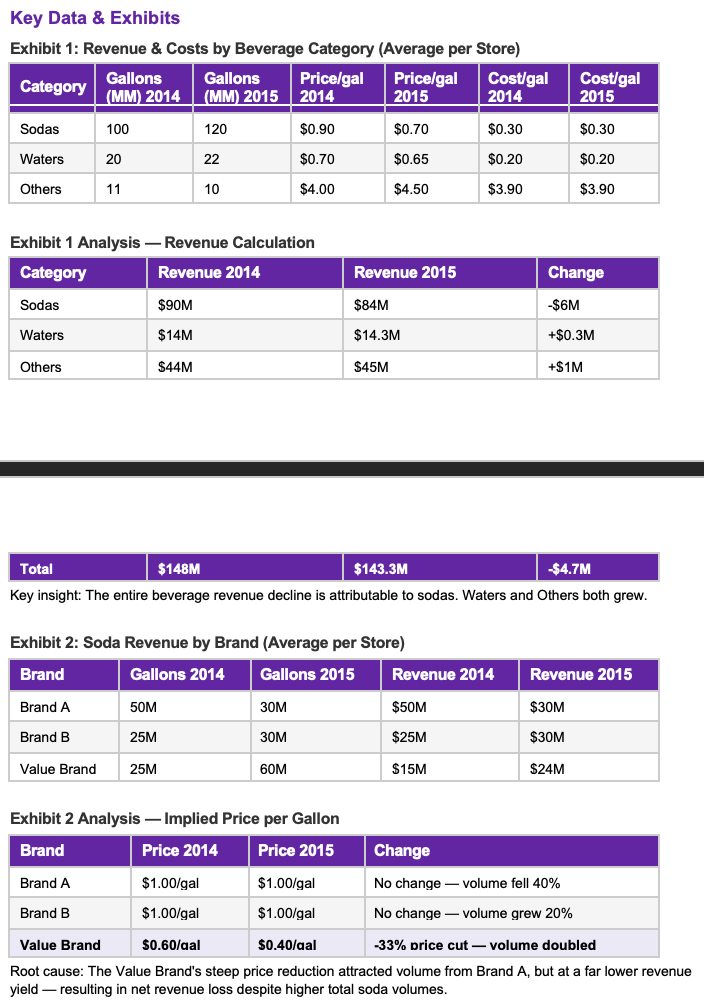
Recommendations (Organized by 4Ps) Price: • Raise the Value Brand price toward a sustainable level that limits revenue dilution without losing volume entirely. • Consider price architecture that better differentiates the three brands. Promotion: • Promote Brand A and Brand B to counteract volume erosion to the Value Brand. • Bundle Value Brand with complementary products to maintain volume while improving revenue mix. Product: • Differentiate the Value Brand from Brand A in packaging, format, or size to reduce direct substitution. Placement: • Reconsider shelf placement of Value Brand relative to Brand A and Brand B to reduce head-to-head cannibalization. Key Risks • Raising Value Brand prices may alienate price-sensitive customers and reduce volume significantly. • Any price changes to Brand A or Brand B could affect supplier relationships. Next Steps • Test pricing elasticity of the Value Brand before committing to a price increase. • Explore bundling opportunities to drive incremental revenue from multiple SKUs. • Conduct a shelf placement audit across stores.
Practice Sessions
Note: Accepted practice sessions will be available in your profile under "My Practice Sessions".
Case Materials
Submissions (0)
Be the first to comment on this case.

Practice with AI
Sharpen your skills by practicing this case with our AI-powered consultant.
Practice Sessions
Note: Accepted practice sessions will be available in your profile under "My Practice Sessions".