
Pushman Potties Inc.
Practice with AI
Hone your skills by practicing this case with our AI-powered consultant.
Pushman Potties Inc., a US manufacturer of standard porta-potties since 1984, has seen core sales stagnate. Management is seeking revenue growth opportunities and is considering entering the luxury portable restroom market — a fast-growing adjacent segment serving weddings, festivals, and high-end outdoor events. The candidate is asked to evaluate potential growth avenues and, specifically, assess whether and how Pushman should enter the luxury segment.
About the Client Company: Pushman Potties Inc., founded 1984, USA Business: Major manufacturer of standard portable toilets (porta-potties) Core markets: Construction sites, agricultural fields, industrial settings Current situation: Sales of standard porta-potties have stagnated over the past several years Industry Context The global portable toilet market was valued at approximately $1.9 billion (US) at the time of the case and is growing steadily The luxury portable restroom segment is the fastest-growing sub-segment, driven by demand from weddings, outdoor festivals, corporate events, and upscale gatherings Luxury units typically include amenities such as flushing toilets, running water, climate control, LED lighting, premium finishes, and in some cases smart/touchless technology New entrants and specialist manufacturers (e.g., restroom trailer companies) have begun addressing this demand, but the market remains fragmented Post-COVID hygiene expectations have elevated consumer standards for temporary sanitation facilities
With standard porta-potty sales stagnating, what are Pushman Potties' most viable avenues for revenue growth — and should the company enter the luxury portable restroom market? If so, how?
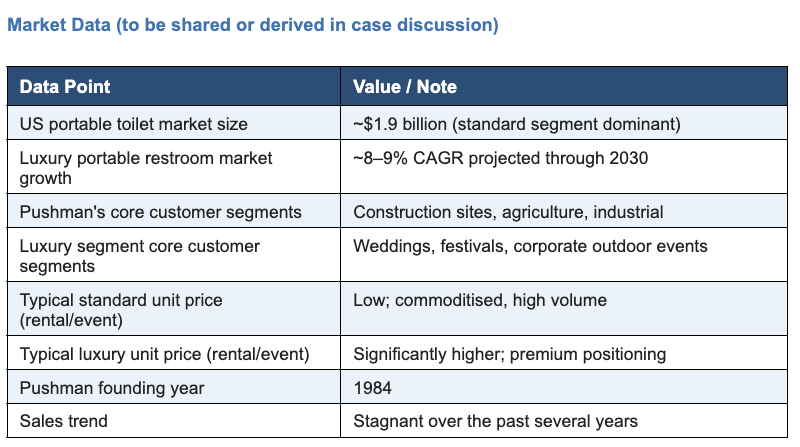
Pushman should pursue the luxury segment as a primary growth lever, given stagnating core revenues and favourable market tailwinds. The recommended entry mode is likely a phased approach: partner with or acquire a luxury unit manufacturer to accelerate time-to-market, while leveraging existing logistics and customer relationships in adjacent segments (e.g., event planners). A direct build would take too long; pure organic entry risks missing the market window.
Practice Sessions
Note: Accepted practice sessions will be available in your profile under "My Practice Sessions".
Case Materials
Submissions (0)
Be the first to comment on this case.

Practice with AI
Sharpen your skills by practicing this case with our AI-powered consultant.
Practice Sessions
Note: Accepted practice sessions will be available in your profile under "My Practice Sessions".