
SLS Oil & Gas Services
Practice with AI
Hone your skills by practicing this case with our AI-powered consultant.
SLS is one of the world's largest oil and gas services companies, and it is haemorrhaging Field Engineers from its Mumbai office at an alarming rate. Attrition among this group has climbed to 28% in 2016, nearly seven times what it was four years prior. The CEO wants to understand what is driving engineers out the door in Mumbai and fix it, with the intention of rolling out a similar solution across other affected offices globally. This case tests a candidate's ability to understand an unfamiliar operating context, read data carefully, and produce specific, actionable recommendations.
SLS operates in 85 countries and employs around 100,000 people drawn from over 140 nationalities. The company helps oil and gas clients find, scope, and drill for hydrocarbons, working across the full upstream value chain from exploration through extraction. Clients range from major international oil companies to petrostates such as Saudi Arabia and Russia. In Mumbai, SLS supports offshore oil and gas extraction for its clients. Field Engineers are dispatched to oil rigs at sea, where they operate specialised SLS equipment to record and analyse subsurface data. All rigs serviced by the Mumbai office are offshore, meaning FEs spend meaningful stretches of time on the water, away from the city, in conditions that are typically poor in terms of food, internet access, and accommodation. How the FE staffing model works: FEs are recruited directly from top engineering universities and hired as Juniors. After roughly two years, they are promoted to Senior. At any given time, one FE (Junior or Senior) is on standby at each rig, and a second FE is sent out when active operations are underway. Both FEs earn a bonus when they are offshore. The optimal stretch an FE likes to spend offshore before being rotated back is around three weeks. Outside of rig time, FEs are either at the Mumbai base office or on leave. What the data shows: The total headcount has remained at roughly 50 FEs for five years, and the number of active rigs has also been stable at 25. What has changed is the composition of movement in and out of the team. Engineers quitting voluntarily has risen sharply year on year, transfers out of Mumbai have dropped to zero since 2015, transfers in have increased, and the attrition rate has gone from under 4% in 2012 to 28% in 2016.
The Mumbai office is losing Field Engineers at a rate that has become a serious operational and commercial risk. At 28% attrition in 2016, SLS is churning through nearly a third of its FE population annually. The engineers who leave are mostly departing for postgraduate study or switching industries entirely, suggesting the job itself is failing to hold them rather than competitors pulling them away. The CEO has asked the consulting team to identify the root causes of high attrition specifically in Mumbai and to develop recommendations that can be replicated in other affected offices around the world.
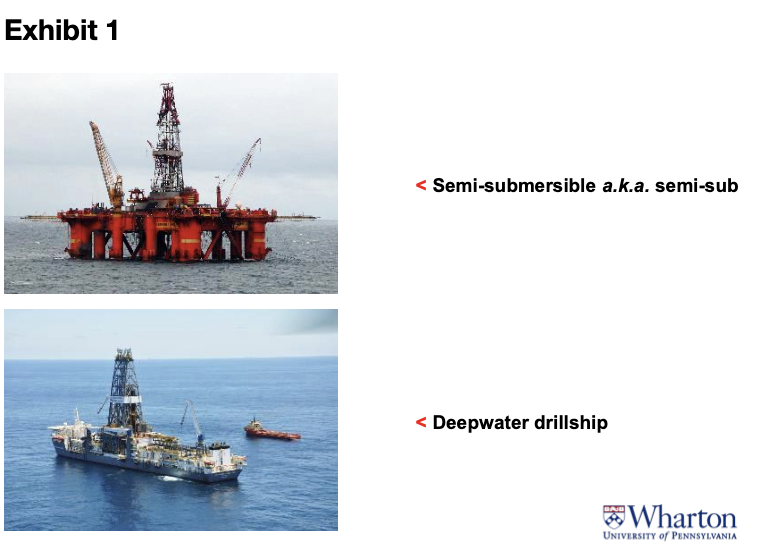
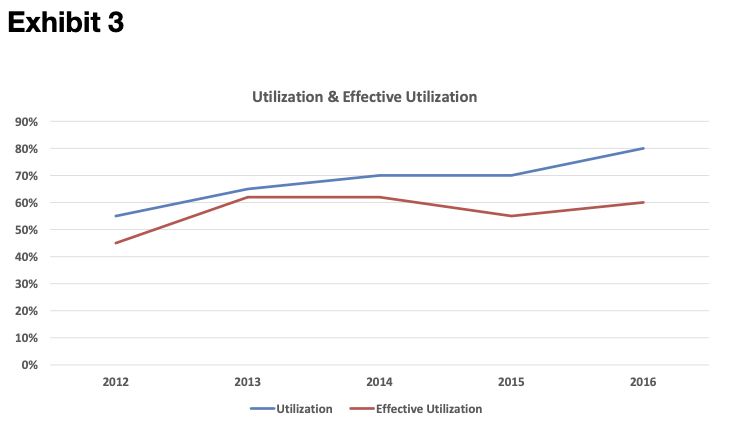
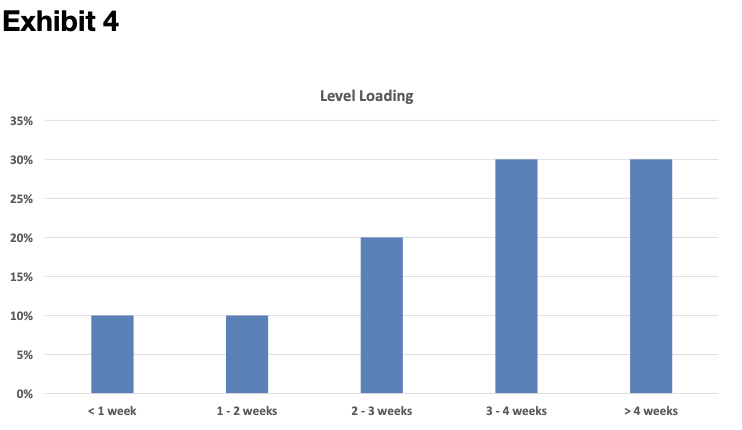
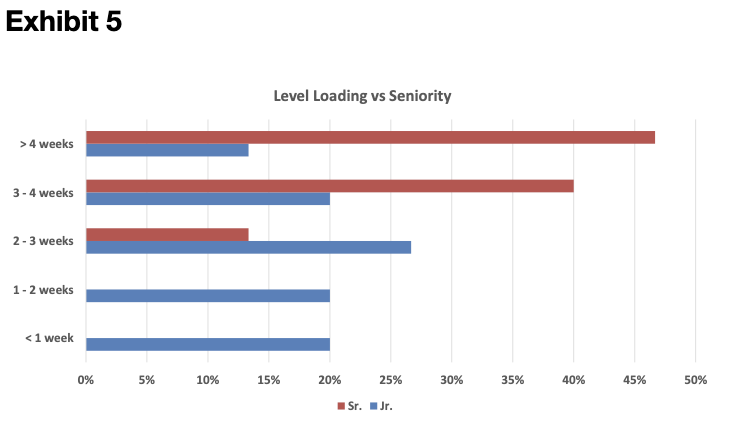
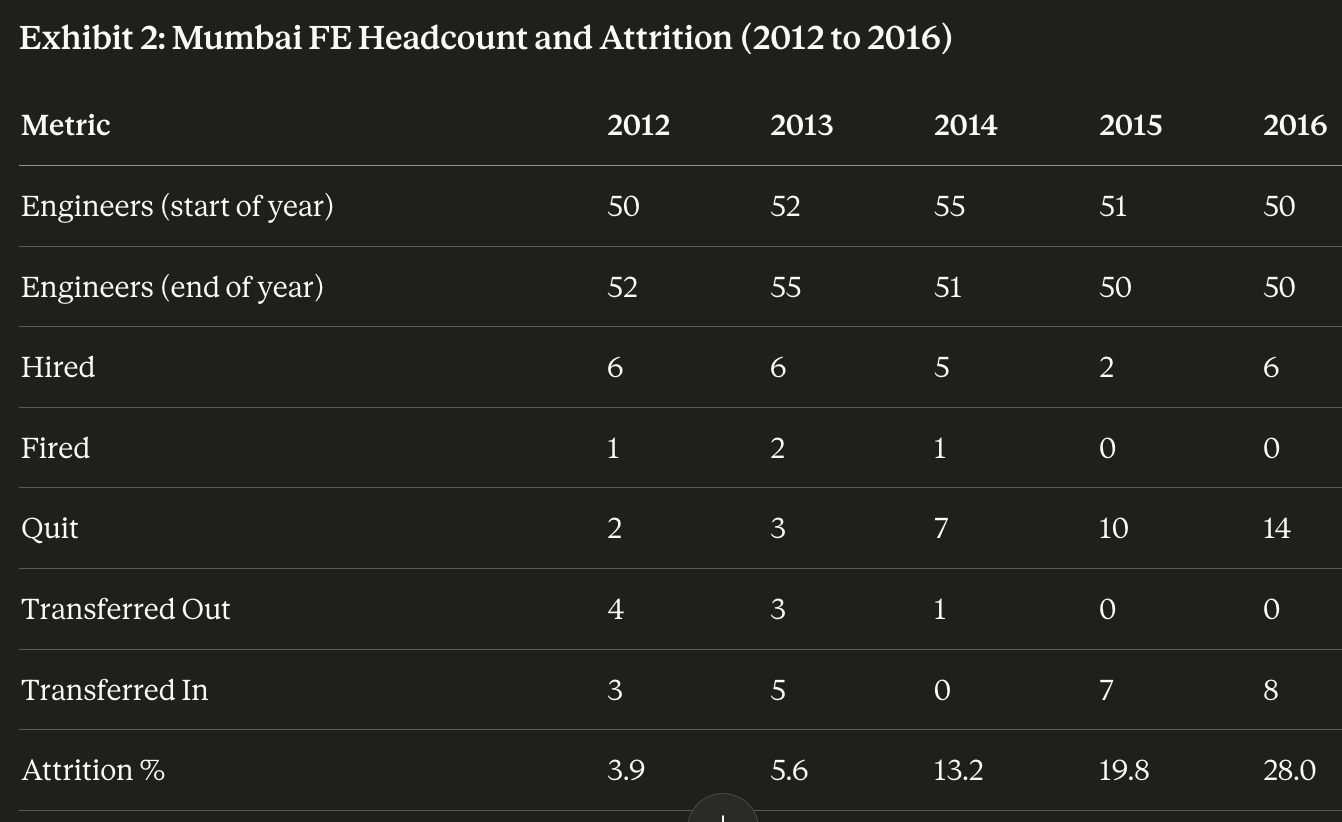
This case is heavy on qualitative reasoning and contextual understanding. The math exists but it is not the centrepiece. A strong candidate needs to first genuinely understand the FE's world before jumping to conclusions, then reason carefully through the data, and finally produce specific recommendations rather than generic retention platitudes. Part 1: Understand the business and the FE's life Before diagnosing anything, establish what the job actually involves. The FE works on offshore oil rigs with poor conditions, earns a bonus only when offshore, was attracted to SLS by the promise of global travel and a fast-moving career, and is now being stuck in an office in Mumbai with no bonus, no rotation out of the city, and no clear career progression. That context is essential to everything that follows. Part 2: Diagnose the root causes Start with FEs themselves before speaking to managers or HR. In-person conversations are more useful than questionnaires because the issues are sensitive and nuanced. Key themes to probe include morale, perceptions of management, what peers who left have said, and whether the role is meeting original expectations. Internal causes rooted in the data: management changed in 2014 and became risk-averse, which had cascading effects. Fewer engineers are being sent on leave, more are sitting idle in the office without bonus income, Senior FEs are being overworked offshore whilst Junior FEs are being kept back due to management distrust of their competence, transfer-outs have gone to zero cutting off a valued career mobility route, and an influx of transferred-in engineers has not been managed to build team cohesion. External causes worth noting: FEs departing for Masters programmes or different industries suggests a mismatch between who is being hired and what the job actually demands. The compensation premium SLS once held over comparable employers has been eroding. The booming start-up ecosystem in India has created viable alternatives for technically skilled engineers in their mid-twenties. Part 3: Recommendations Short-term actions (within weeks to a few months): Train the management team and make offshore rotation a process-driven system rather than one dependent on individual manager judgment. Swap FEs off rigs after roughly three weeks on a predictable schedule, not whenever managers feel comfortable. Push effective utilisation up to around 68% so that more FEs are offshore earning bonus and fewer are sitting idle in the office. Invest in making offshore life more bearable by sending better food, equipment for leisure, and improving connectivity where possible. Begin tracking Junior FE competency formally and run structured training to close the skill gaps that management is using to justify keeping them onshore. Introduce team-building activities to help integrated and transferred-in engineers build rapport. Longer-term actions (six months and beyond): Resume a healthy level of transfer-outs or create rotational assignments to other SLS offices, so that Mumbai does not feel like a dead end. Revisit the compensation structure and benchmark it against comparable employers in India. Rethink recruitment by setting clearer expectations about the offshore lifestyle during campus hiring, so that people who join are genuinely suited to it. Use internal and campus marketing to actively promote what is distinctive about an SLS career rather than letting the narrative be defined by those leaving. Hiring additional engineers is an option but comes at direct cost and should only follow structural fixes, not replace them.
Practice Sessions
Note: Accepted practice sessions will be available in your profile under "My Practice Sessions".
Case Materials
Submissions (0)
Be the first to comment on this case.

Practice with AI
Sharpen your skills by practicing this case with our AI-powered consultant.
Practice Sessions
Note: Accepted practice sessions will be available in your profile under "My Practice Sessions".