
MIMO Technology
Practice with AI
Hone your skills by practicing this case with our AI-powered consultant.
Our client is a very well-funded start-up that has invented a prototype for a new technology that they think could provide value to wireless carriers. However, the remaining R&D will be expensive. They want our help to determine the value of this invention and whether or not to proceed with further research and development.
Our client is a very well-funded start-up that has invented a prototype for a new technology that they think could provide value to wireless carriers. However, the remaining R&D will be expensive. They want our help to determine the value of this invention and whether or not to proceed with further research and development.
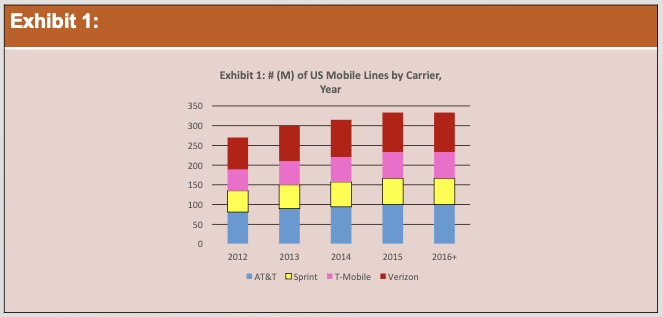
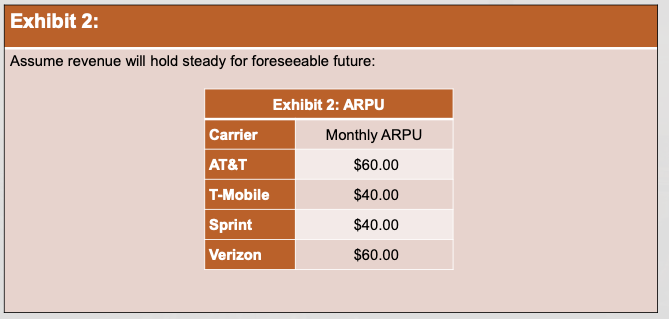
Some potential areas to consider: Customers - Profit (revenues, costs, etc.) - Valuation - Market Size - Market/Competition/Macro factors - Risks A potential starting hypothesis: the client should develop this technology if the present value of the profits are greater than the additional investment, as the R&D to date is a sunk cost. To determine this, I would like to learn more about the customers, potential profits, the size of the market, and any potential competition or alternatives the carriers may have to ensure these components are favorable. If the candidate is still struggling to determine how to estimate revenue, suggest to him to use the potential CAPEX cost savings of the carriers as the total addressable market for our client. If he asks outright for the CAPEX figures for each carrier, ask him what he thinks drives a carrier’s CAPEX. The correct answer should be something about data and/or end-user demand. Tell the candidate that we presently do not have exact numbers regarding the CAPEX of each carrier, but that we know it is a function of their total revenue. AT&T, Verizon, and T-Mobile spend 10% of their revenue on CAPEX, while Sprint spends 5%. Start with US population > discount those too old or too young to use cell phones > discount out those that can't afford cell phones > discount those that don't want cell phones > account for those with two or more cell phones. for example: 320M population; assume even age distribution 0-80; assume everyone below 10 (40M) and above 75 (20M) don't have cell phones, but 10-75 age bracket does; discount bottom income decile not having phone (10% of remaining population, or 26M; reason: approximately in line with poverty line); discount another 10% (WAG) that don't want cell phones; assume 30% (WAG) of cell users have 2 phones, Add in another 10% (WAG) of other connected devices. This yields an estimate of approximately 297M users at present (round to 300M). Assuming an average revenue of $50/month, the total market size is approximately $180B in revenue. A strong candidate will discuss the potential weaknesses of his estimate, and better yet, where one might find such data, without prompting. Additional Information: Following the candidate’s overall market sizing, show him Exhibit 1. Ask candidate what information he can determine from the exhibit [tell candidate to assume this figure includes all other connected devices; bonus points for them considering things like tablets]. Ask the candidate what more information he would like to know to determine the size of the opportunity. He should ask for individual revenue/ARPU since overall revenue is not available. At this point, the candidate should have sufficient information to calculate the CAPEX for each carrier (a strong candidate will ask if the technology provides savings across all CAPEX, if he did not do so earlier; as noted above, the technology can be used in only 20% of CAPEX). See math on the next page (rounding is encouraged). Valuation Calculation: Instruct the candidate to use a discount rate of 20% in perpetuity. Potential Revenue: $950M/year Potential costs (labor): $70M/year Potential Gross Profit: $880M/year Expected Gross Profit: Potential GP *.5 + 0*.5 = $880M * .5 = $440M DCF = $440𝑀 .2 =$2.2B Maximum NPV of decision to continue research: $2.2B - $60M = $2.14B Top candidates will A) consider investment costs in their final NPV calculation and B) distinguish between incremental investment costs ($60M) and the sunk investment costs ($40M). (note that this is the maximum value of the decision, since carriers will want a portion of the value generated for themselves. To add another level of calculation, instruct the candidate to price the product at 20% of the algorithm’s economic value)
Practice Sessions
Note: Accepted practice sessions will be available in your profile under "My Practice Sessions".
Case Materials
Submissions (0)
Be the first to comment on this case.

Practice with AI
Sharpen your skills by practicing this case with our AI-powered consultant.
Practice Sessions
Note: Accepted practice sessions will be available in your profile under "My Practice Sessions".