
Leisure Clubs
Practice with AI
Hone your skills by practicing this case with our AI-powered consultant.
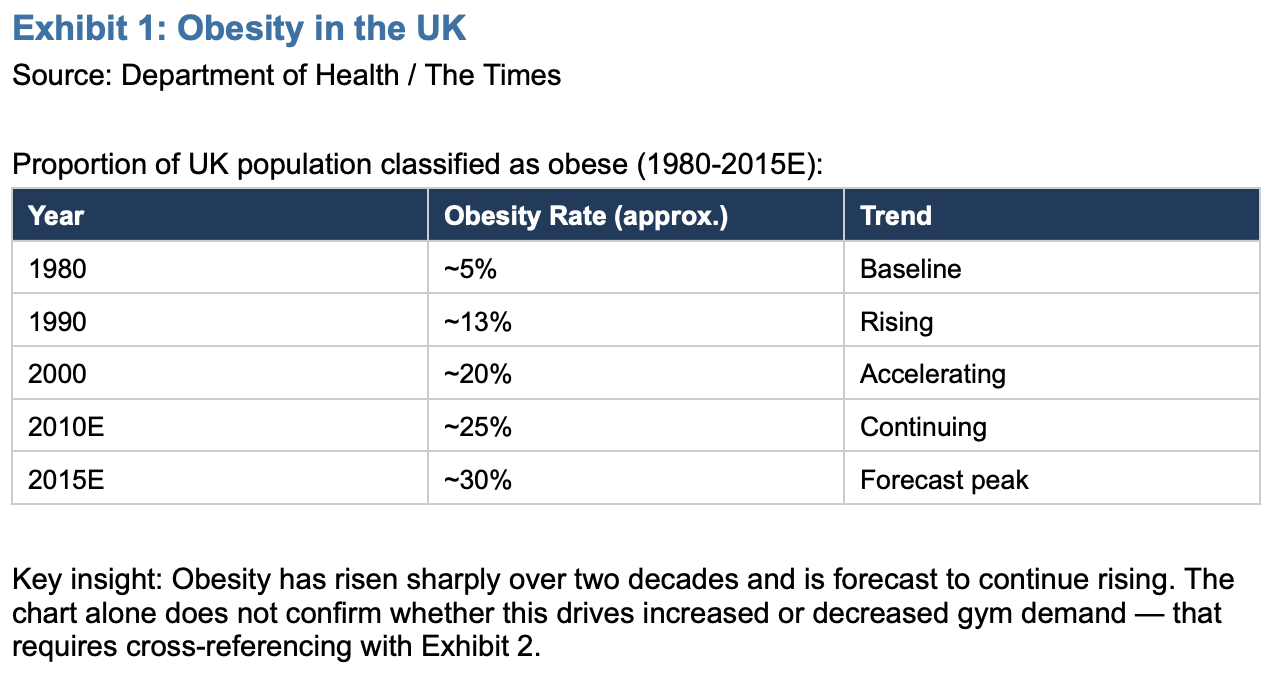
A major UK hotel chain operating a portfolio of large, out-of-town health clubs (leisure clubs) has commissioned OC&C to assess what to do with its leisure clubs division. The strategic options under consideration include divestiture, organic expansion, or acquisition of a competitor. This case is a data interpretation exercise that requires candidates to analyse demand drivers, interpret charts, assess competitive dynamics, and ultimately recommend where and how the client should build new clubs. The case is structured as a progressive set of questions, each building on the conclusions of the last.
Client profile: A major UK hotel chain with a leisure clubs division (the focus of this case), alongside hotels and casinos The health clubs are large, out-of-town sports centres offering facilities including a gym, jacuzzi, and swimming pool Membership pricing: approximately £30-40 per month for an individual — a relatively premium offering Market context: The UK leisure club market is growing but so is competition — the number of clubs is forecast to increase significantly in the near term Competitors range from premium club operators to low-cost council-run gyms (as cheap as £2 per visit) Different clubs target very different customer segments, which affects how directly they compete Case type: This is a data interpretation case. Five charts are presented during the interview, of which two are directly useful and three are deliberate distractions. Candidates must identify and use the relevant data.
The client's Strategy Office has asked OC&C to assess the leisure clubs market and help determine the optimal strategic direction for the division. The specific tasks are: - Identify the key drivers of demand for leisure clubs and assess the likely trajectory of demand - Interpret market data to form a view on future demand trends - Assess the competitive supply landscape and identify the critical strategic risk - Segment the leisure club market to understand which competitors directly threaten the client - Recommend a geographic expansion strategy that maximises long-term competitive advantage The output should help the client decide: sell, expand organically, or acquire?
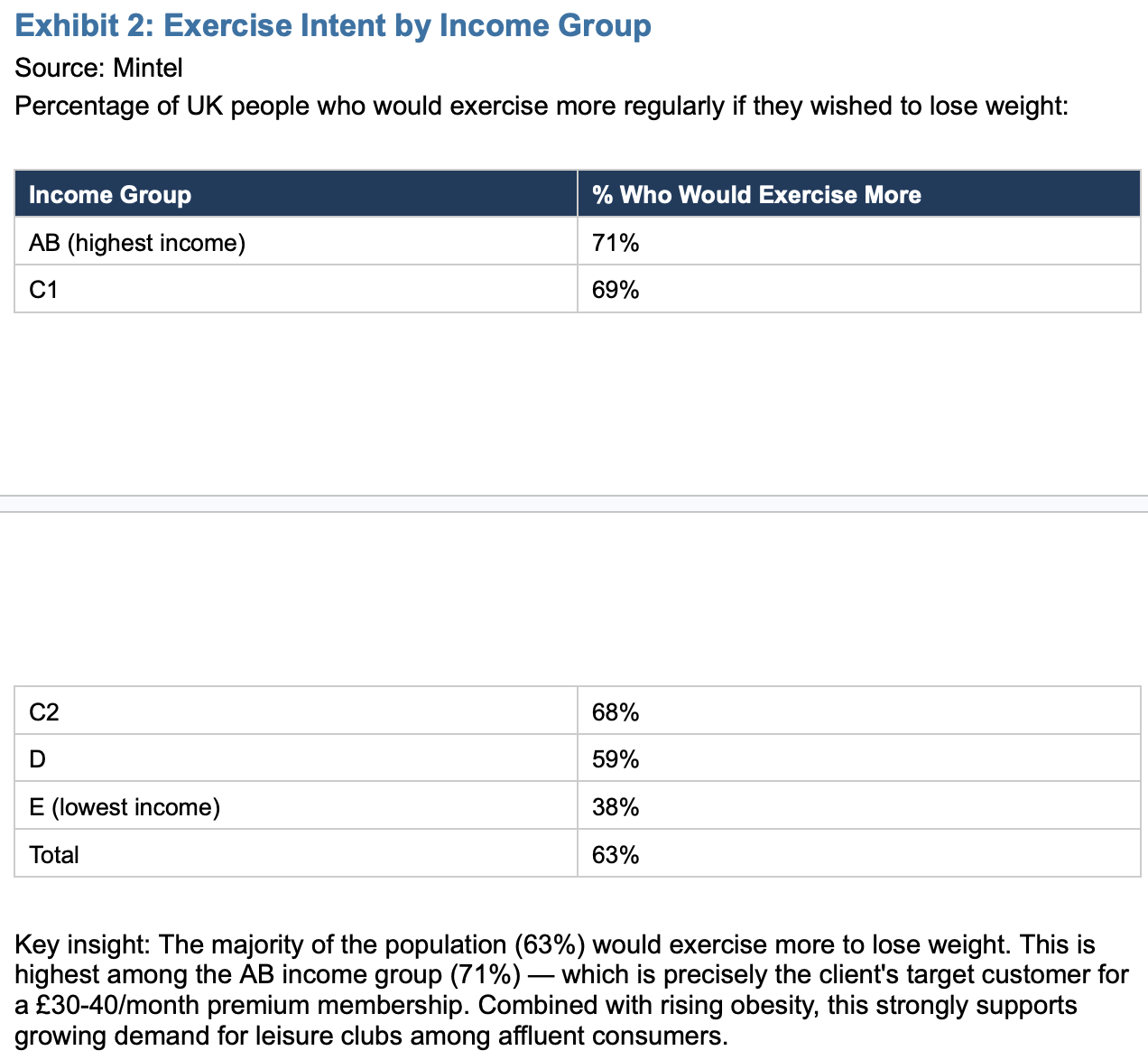
Strategic Recommendation: Build in Smaller Towns to Create Local Monopolies The client should expand organically, but target smaller towns rather than large cities where competitors are concentrating. The rationale is as follows: Why Smaller Towns? In a smaller town, the population is large enough to support only one premium leisure club profitably By building first, the client attracts members who develop loyalty to the club When competitors subsequently assess where to build, they will see that the available customer pool in that town is already committed — and that competing for those customers would be costly and uncertain Competitors will rationally skip that town in favour of markets with uncontested demand, leaving the client with an effective local monopoly This monopoly position insulates the client from the price competition that is likely to emerge in large cities — where multiple clubs of similar positioning will compete for the same customer base Why Not Large Cities? Competitors are planning to build heavily in major cities, creating high-density competition In a market with excess supply, price competition will compress margins The client's current positioning (£30-40/month) is vulnerable in a price war against well-funded operators Implementation Priorities Market mapping: Identify UK towns with populations large enough to sustain one premium health club but not two — these are the priority targets Speed to market: First-mover advantage is the entire basis of the strategy; club openings must precede or outpace competitor builds in target towns Customer retention: The strategy only works if early members become loyal; invest in service quality and member engagement from day one Portfolio monitoring: Track competitor build activity regularly; if a competitor moves into a target town, accelerate the client's own build timeline Long-term optionality: As smaller-town markets mature, some may be able to support expansion (e.g. a second facility or upgraded offering) — building optionality into site selection
Practice Sessions
Note: Accepted practice sessions will be available in your profile under "My Practice Sessions".
Case Materials
Submissions (0)
Be the first to comment on this case.

Practice with AI
Sharpen your skills by practicing this case with our AI-powered consultant.
Practice Sessions
Note: Accepted practice sessions will be available in your profile under "My Practice Sessions".