
Cosmetics Company
Practice with AI
Hone your skills by practicing this case with our AI-powered consultant.
The client is the North American CEO of a global personal and home care products company. He has hired Capgemini Consulting to turn around the North American business from loss to profitability within two years. We’ve scheduled the final presentation with the board this afternoon, but the project team is stranded at an airport unable to make the presentation. You are asked to step in and make the presentation instead.
A global personal and home care products company has been operating at a loss in its North American business. The CEO of North America has engaged Capgemini Consulting to turn around the business from loss to profitability within two years. The candidate is asked to step in and deliver the final board presentation in place of the stranded project team. Three exhibits were developed by the original project team to anchor the analysis: • Exhibit 1: Growth in personal care consumption by age group and gender across Canada, USA, and Mexico (2012-2017) • Exhibit 2: Ranking of major household spending categories by share of wallet and perceived necessity • Exhibit 3: Product-channel strategy map comparing the client against key cosmetics competitors
What is driving the North American losses? What strategic moves should the client make to restore profitability within a two-year timeframe?
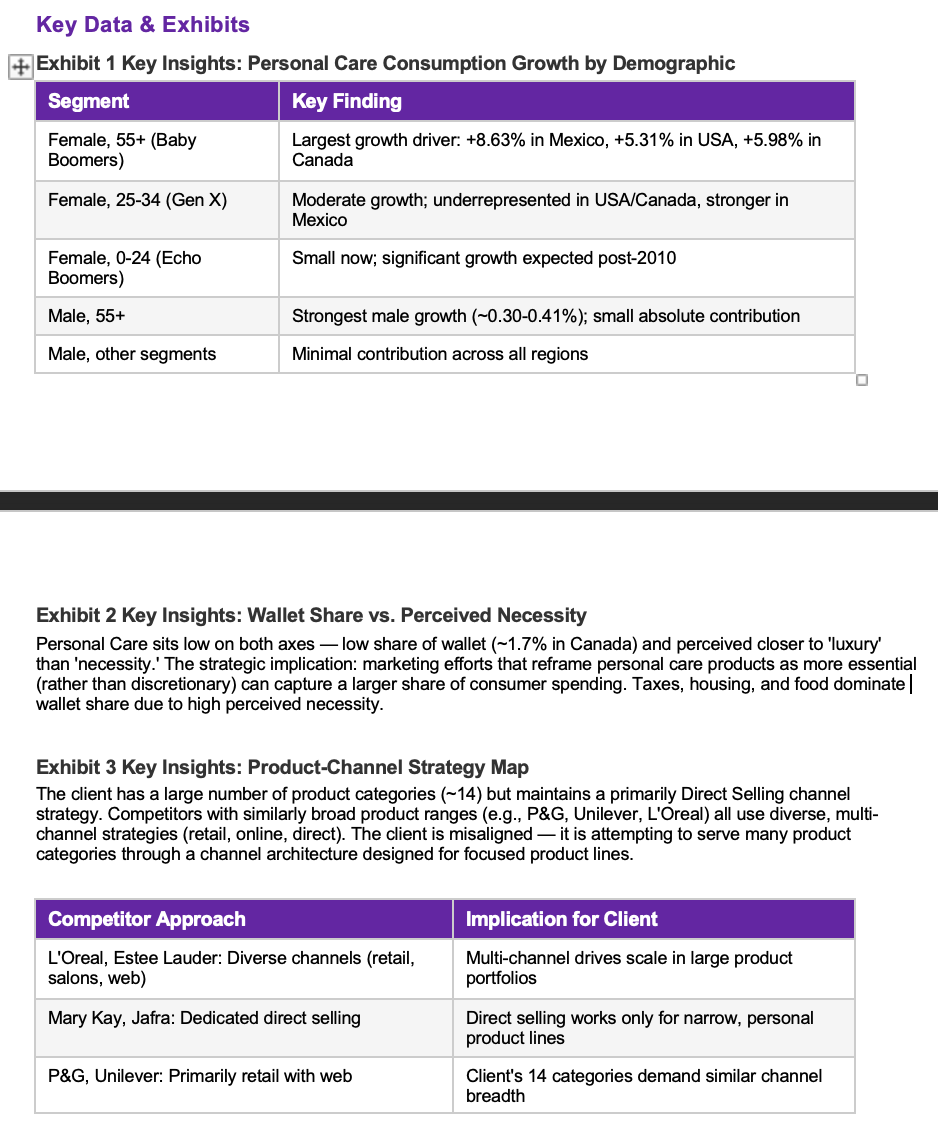
Recommendation • Focus marketing investment on female Baby Boomers (55+), who are the dominant growth driver across all three North American markets. • Develop marketing strategies that elevate personal care's 'necessity' perception to increase share of wallet. • Transition the channel strategy from dedicated direct selling to a diverse, multi-channel approach appropriate for a 14-category product portfolio. Key Risks • Market growth may decelerate or reverse, making growth projections unreliable. • Substitute products and shifting consumer trends (e.g., toward natural/clean beauty) could erode the client's relevance. Next Steps • Commission deep customer research to understand spending drivers and unmet needs by segment. • Conduct cost-benefit analysis for diversifying distribution channels. • Review marketing spend allocation by channel and customer segment.
Practice Sessions
Note: Accepted practice sessions will be available in your profile under "My Practice Sessions".
Case Materials
Submissions (0)
Be the first to comment on this case.

Practice with AI
Sharpen your skills by practicing this case with our AI-powered consultant.
Practice Sessions
Note: Accepted practice sessions will be available in your profile under "My Practice Sessions".