
Home Inspection Co.
Practice with AI
Hone your skills by practicing this case with our AI-powered consultant.
Our Client, Home Inspection Co., is a third party independent home inspection company who conducts the inspections after a home is sold. They currently operate out of Ohio, and they have hired us to help them figure out if they should expand to more states, and if so, which state(s) and how?
Home Inspection Co. is a third-party independent home inspection company operating out of Ohio. The company conducts inspections on single-family homes after a sale is completed. It currently generates $10 million in annual revenue. The client is evaluating geographic expansion to increase top-line revenue, and has narrowed its options to two candidate states: Colorado and Michigan. The client can only expand to one state at this time. The home inspection market in both states is relatively flat in terms of overall demand. However, both states differ significantly in their regulatory environments, competitive intensity, and addressable market size, all of which must be weighed carefully.
(read to candidate): Our client, Home Inspection Co., is a third-party independent home inspection company that conducts inspections after a home is sold. They currently operate out of Ohio, and they have hired us to help them figure out if they should expand to more states, and if so, which state(s) and how? Key Decision • Should Home Inspection Co. expand beyond Ohio? • If yes — which state, Colorado or Michigan? • How should the expansion be executed?
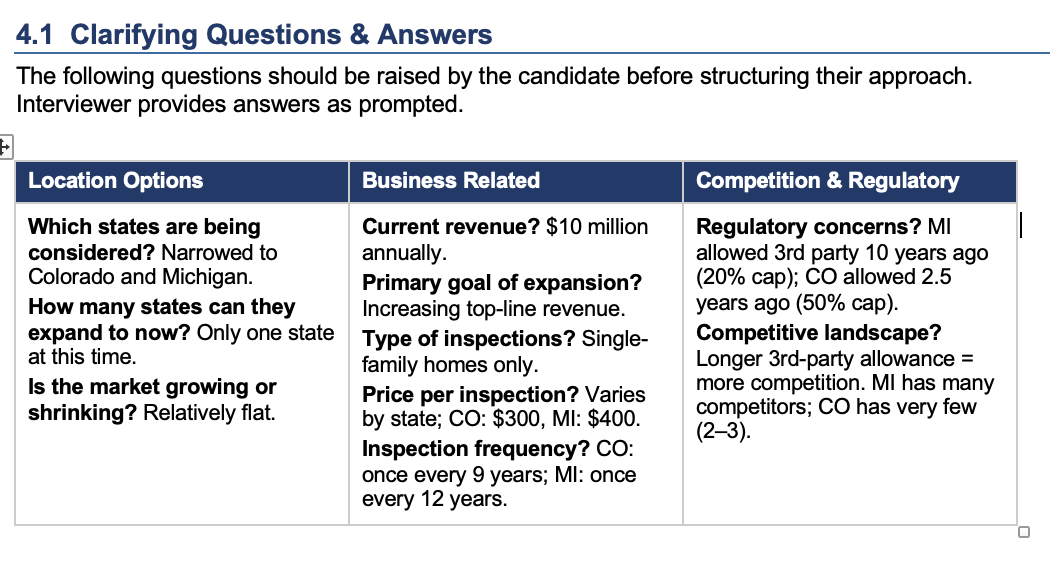
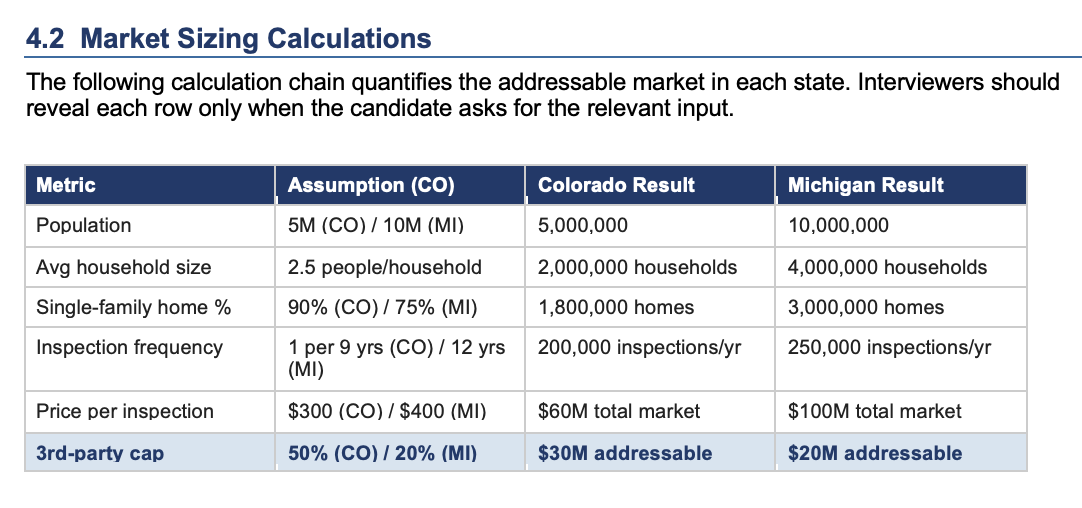
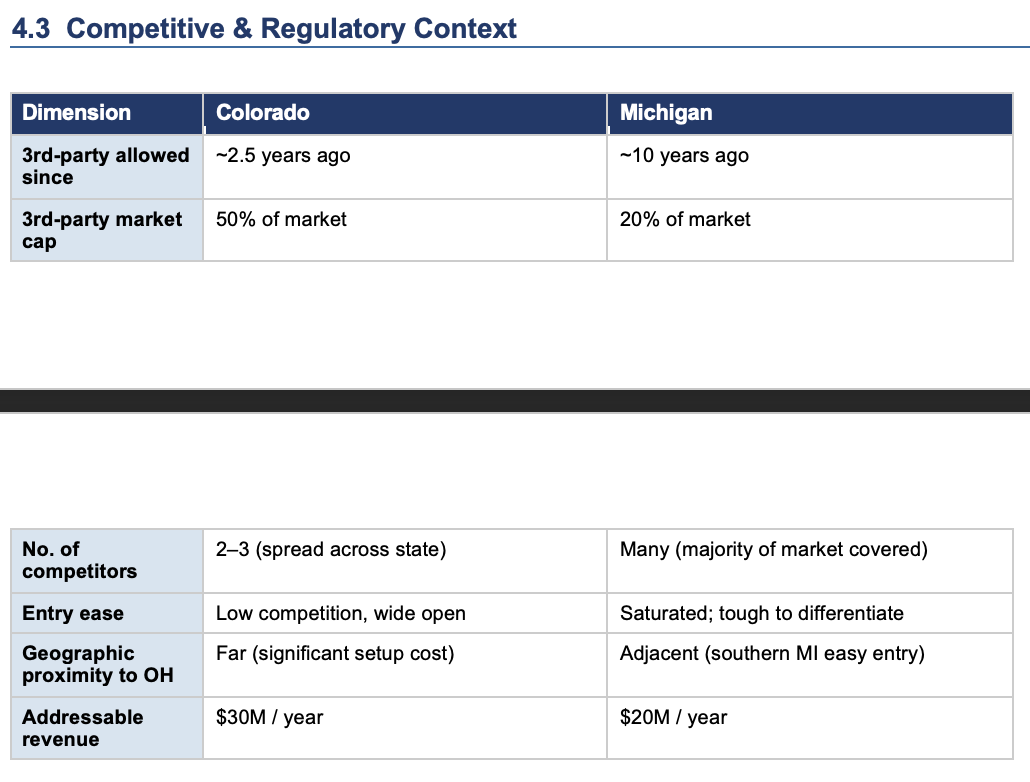
Framework: A strong framework analyzes each candidate market across three dimensions: market size (including regulatory adjustments), competitive landscape, and market entry strategy. The candidate should then synthesize both markets and arrive at a clear, recommendation. Market Size → Competition → Entry Strategy → Risk → Recommendation Colorado - Analysis Summary: Opportunity • Total market: $60M/year; addressable (post-cap): $30M/year • Very few competitors (2–3 independent inspectors spread evenly across the state) • Third-party inspections only recently legalized — first-mover advantage still available • Entry strategy: Focus on Denver (largest market) OR identify underserved rural areas Risks • Geographic distance from Ohio increases setup, hiring, and training costs • Regulatory risk: State could impose a lower cap (like Michigan's 20%) in the future • Cultural adoption of 3rd-party inspectors may still be nascent 6.3 Michigan - Analysis Summary: Opportunity • Total market: $100M/year; addressable (post-cap): $20M/year • Geographic adjacency to Ohio allows cost-efficient expansion into southern Michigan • Existing Ohio employees could be reassigned, reducing setup and training costs Risks • Market is mature with many established competitors — saturation risk is high • 20% regulatory cap significantly limits addressable revenue • Market demand could shift further with Michigan's economic volatility 6.4 Final Recommendation: Recommended: Expand to Colorado. Colorado offers a larger addressable opportunity ($30M vs. $20M) with significantly less competition. While the geographic distance from Ohio presents operational challenges, the first-mover advantage and higher revenue ceiling make Colorado the superior choice. Michigan's adjacency advantage is outweighed by its saturated competitive landscape and restrictive regulatory cap. Immediate Next Steps 1. Scout Colorado to map competitor locations and identify optimal office placement (Denver vs. secondary cities). 2. Assess build vs. acquire options for Colorado market entry. 3. Monitor Colorado regulatory environment for any planned changes to the 50% cap. 4. Develop a staffing and training plan for a Colorado-based inspector team.
Practice Sessions
Note: Accepted practice sessions will be available in your profile under "My Practice Sessions".
Case Materials
Submissions (0)
Be the first to comment on this case.

Practice with AI
Sharpen your skills by practicing this case with our AI-powered consultant.
Practice Sessions
Note: Accepted practice sessions will be available in your profile under "My Practice Sessions".